
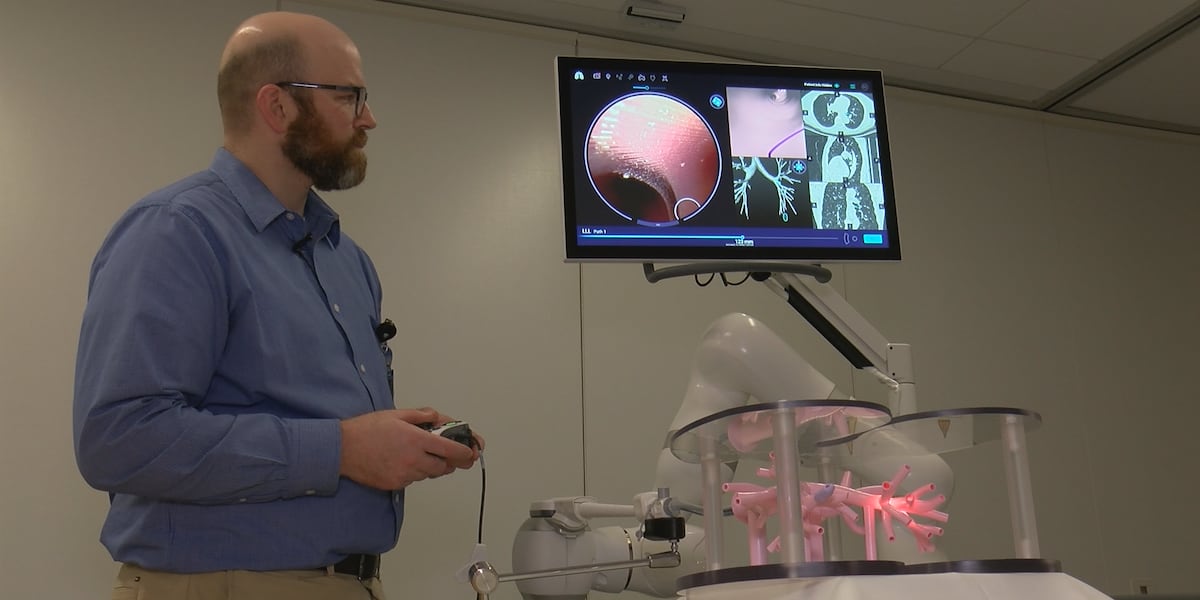
DULUTH, Minn. (Northern News Now) – In a lung cancer battle, timing is everything. That’s why Essentia Health is turning to a cutting-edge system that’s helping doctors in the Northland detect the disease faster than ever.
Doctors at Essentia Health have a powerful new tool in the fight against lung cancer. It’s called the Galaxy System, and doctors say this technology is catching lung cancer earlier and giving patients a better shot at survival.
Pat McKone with the American Lung Association said, “lung cancer is this second most common cancer diagnosed in Minnesota, and it is the leading type of cancer that results in cancer deaths in Minnesota.”
It’s a staggering statistic that medical professionals say should drive more people to get screened, but unfortunately that’s not usually the case.
Nurse practitioner with Essentia Health Lindsay Wallace said, “there are studies that show that only 10% of the people that qualify for lung cancer screening are actually going through with getting screened. A lot of it, I think is because there’s a stigma around lung cancer of only smokers get lung cancer, that’s not necessarily the case.”
Experts at Essentia Health say this Galaxy robot performs bronchoscopies on patients—using a camera to view the lungs and airways—to detect lung nodules and perform biopsies earlier and in more treatable stages.
This allows doctors to deliver diagnoses quickly when time is critical.
Pulmonologist Eric Swanson said, “we can reach things when they are much smaller, as we are screening people to find it at an earlier stage, all of these advents have improved the survival rate of lung cancer.”
They say low screening numbers are partially due to lung cancer being blamed solely on smoking, overlooking over 17,000 annual deaths among people who have never smoked.
“We’re trying to push past that stigma, get people screened so that we can catch lung cancer when it’s at its earliest stages, because if we catch things at stage one, it’s more likely that we’re going to be able to cure it,” said Wallace.
You are eligible for lung cancer screening if you are between the ages of 50-77 and have a 20 pack-year smoking history – that’s one pack a day for 20 years or two packs a day for 10 years. It also includes current smokers or those who have quit within the last 15 years.
The American Lung Association also has resources on their website; you can find that at lung.org.
Click here to download the Northern News Now app or our Northern News Now First Alert weather app.
Copyright 2026 Northern News Now. All rights reserved.
link