


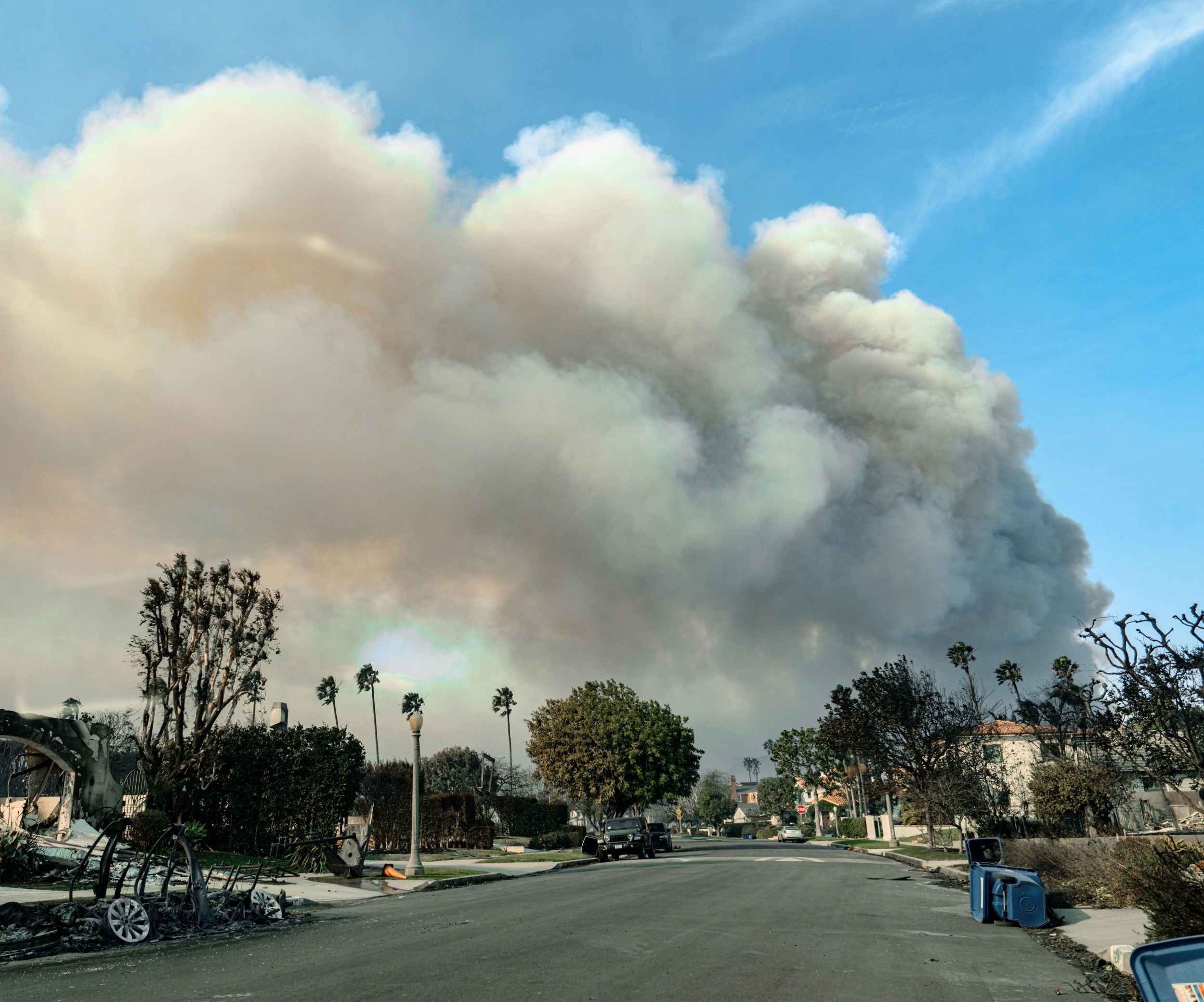
Wildfires leave behind more than burned land. Smoke, stress, and toxic chemicals can quietly affect human health long after flames disappear.
After devastating wildfires swept through Southern California in January 2025, doctors in Los Angeles began noticing an increase in severe health issues.


A new study from the Cedars-Sinai Medical Center explains how wildfire exposure may trigger heart disease, lung illness, and body-wide stress responses within weeks.
Researchers focused on emergency room visits after fires spread through areas near Pacific Palisades and Altadena.
The results suggest wildfire exposure can cause fast damage inside the body, especially after fires burn both natural and urban materials.
Wildfires increase health risks
Wildfires near cities behave differently from forest only fires. Fires at the wildland urban interface burn trees, homes, cars, plastics, and metals at once.
Smoke from the fires carries a complex mix of fine particles, toxic gases, and heavy metals.
Dr. Susan Cheng is the director of Public Health Research at Cedars Sinai and senior author of the study.
“Wildfires that spread into urban areas have proven to be extremely dangerous because of how quickly they move and what they burn and release into the environment,” said Dr. Cheng.
“Our research suggests the Eaton and Pacific Palisades fires had an immediate effect on people’s health.”
Fine smoke particles measure less than 2.5 micrometers in size. Such particles can pass deep into lung tissue and enter blood vessels.
Once inside, particles can trigger inflammation, blood vessel injury, and immune system stress.
Health changes after LA wildfires
Researchers examined emergency encounters at Cedars Sinai Medical Center, the largest adult acute care hospital in Los Angeles County.
The medical center sits about 10 miles from Pacific Palisades and roughly 18 miles from Eaton fire origins.
Emergency visits from January 7 to April 7, 2025 were compared with visits from the same calendar period during years 2018 through 2024. Statistical methods accounted for seasonal trends, time effects, and pandemic related disruptions.
Total emergency visit numbers stayed stable. Specific medical conditions, however, showed sharp increases.
Heart attacks and lung illness rose
Emergency visits for acute pulmonary illness rose by 24 percent. Heart attack related visits increased by 46 percent. General illness visits more than doubled.
“Fine particles released by wildfires can enter the body and cause injury, particularly to the heart and lungs,” said Dr. Cheng. “Stress related to the fires may also contribute to a broad range of health issues.”
Smoke exposure can disrupt oxygen flow, irritate airway lining, and strain heart muscle. Emotional stress from evacuation, property loss, and fear can raise blood pressure and heart workload.
Combined exposure may explain rapid heart attack increases seen after fire onset.
Abnormal blood test results
The researchers also discovered a large rise in abnormal blood chemistry results. Such abnormalities often reflect systemic stress rather than damage to one single organ.
“Abnormal blood test results could indicate that the body is responding to an external stressor such as toxins in the air,” said
Study lead author Dr. Joseph Ebinger is an associate professor in the Department of Cardiology at Cedars-Sinai.
“Study is an important step toward understanding how the Eaton and Palisades fires may have affected Angelenos’ health,” said Dr. Ebinger.
“More research remains necessary to determine how remaining risks can be reduced and how protection from fire related harm can improve in future years.”
Wildfire health effects may linger
The results of the research suggest wildfire smoke may alter immune cell function. Toxic metals and chemical compounds released during urban fires may change gene activity inside immune cells.
Such changes can affect many organs at once, leading to symptoms like chest pain, dizziness, breathing difficulty, or abnormal lab results without a clear single diagnosis.
Health problems appeared quickly after fire onset, yet some effects may persist longer. Severe illness may strike vulnerable individuals early. Milder or delayed effects may emerge weeks later as inflammation continues.
Urban fire smoke differs from forest smoke due to higher chemical complexity. Research suggests mixed fuel smoke may cause broader systemic effects than wildland smoke alone.
Such exposure may help explain unusual blood test findings reported after Los Angeles fires.
An ongoing research effort
The findings form part of the LA Fire HEALTH Study, a long-term collaboration focused on wildfire health outcomes. Scientists plan to track affected residents for ten years.
Ongoing work aims to guide public health planning, emergency response, and long term care after future wildfires. Fire damage does not end when smoke clears.
Uncovering the hidden health impacts could help safeguard communities as they confront a hotter, fire-prone future.
The study is published in the journal JACC.
—–
Like what you read? Subscribe to our newsletter for engaging articles, exclusive content, and the latest updates.
Check us out on EarthSnap, a free app brought to you by Eric Ralls and Earth.com.
—–
link