



A newly identified lung cell “switch” could help doctors unlock the lungs’ natural ability to heal themselves.
Scientists at Mayo Clinic have uncovered a molecular “switch” inside lung cells that determines whether those cells focus on healing damaged tissue or defending against infection. The discovery offers new insight that could shape future regenerative treatments for chronic lung diseases.
“We were surprised to find that these specialized cells cannot do both jobs at once,” says Douglas Brownfield, Ph.D., senior author of the study published in Nature Communications. “Some commit to rebuilding, while others focus on defense. That division of labor is essential. And by uncovering the switch that controls it, we can start thinking about how to restore balance when it breaks down in disease.”
The Dual Role of Alveolar Type 2 (AT2) Cells
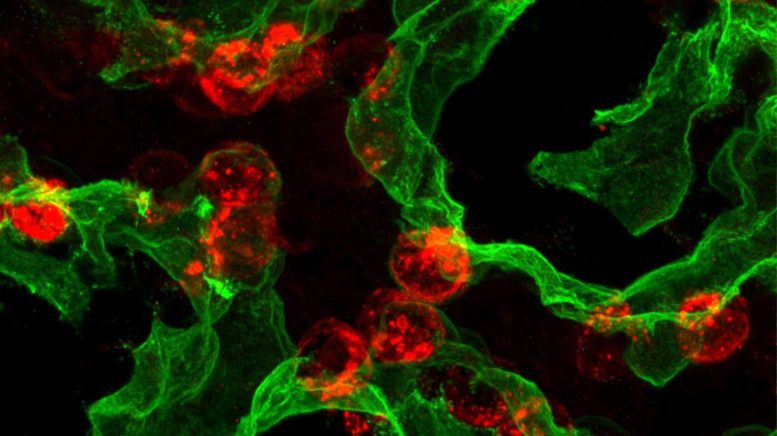
The research centers on alveolar type 2 (AT2) cells, which play a critical role in lung health. These cells help maintain the air sacs by producing proteins that keep them open during breathing. At the same time, they serve as reserve stem cells capable of replacing alveolar type 1 (AT1) cells, the thin cells that form the surface where oxygen passes into the bloodstream.
For years, researchers have observed that AT2 cells often fail to regenerate effectively in conditions such as pulmonary fibrosis, chronic obstructive pulmonary disease (COPD), and severe viral infections including COVID-19. However, the biological reason these cells lose their regenerative ability had not been fully understood.

Tracking the Life Cycle of Lung Stem Cells
To investigate, the team used single cell sequencing, imaging techniques, and preclinical injury models to follow the developmental timeline of AT2 cells. They found that newly formed AT2 cells remain adaptable for about one to two weeks after birth. After that window, the cells settle permanently into their specialized state.
This shift is regulated by a molecular circuit involving three major factors: PRC2, C/EBPα, and DLK1. One of these regulators, C/EBPα, functions like a clamp that restrains stem cell behavior. In adult lungs, AT2 cells must release this clamp after injury in order to regenerate tissue.
Why Infection Can Slow Lung Recovery
The same molecular mechanism also determines whether AT2 cells prioritize tissue repair or immune defense. This helps explain why infections can interfere with healing and delay recovery in people with chronic lung disease.
“When we think about lung repair, it’s not just about turning things on — it’s about removing the clamps that normally keep these cells from acting like stem cells,” says Dr. Brownfield. “We discovered one of those clamps and how it times the ability of these cells to repair.”
New Paths Toward Regenerative Lung Therapy
The findings highlight promising new targets for regenerative medicine. For example, treatments that adjust C/EBPα activity could enhance the ability of AT2 cells to rebuild lung tissue or limit scarring in pulmonary fibrosis.
“This research brings us closer to being able to boost the lung’s natural repair mechanisms, offering hope for preventing or reversing conditions where currently we can only slow progression,” says Dr. Brownfield.
The work may also support earlier diagnosis by helping clinicians recognize when AT2 cells are locked into one state and unable to regenerate. Identifying this imbalance could lead to new biomarkers for lung disease. The research supports Mayo Clinic’s Precure initiative, which emphasizes detecting disease in its earliest stages—when interventions are most effective—and stopping disease progression before organ failure occurs.
At the same time, the study contributes to Mayo Clinic’s Genesis initiative, focused on preventing organ failure and restoring function through regenerative medicine. Researchers are now testing ways to remove the restrictive clamp from human AT2 cells, grow them in the laboratory, and explore their use in potential cell replacement therapies.
Reference: “A molecular circuit regulates fate plasticity in emerging and adult AT2 cells” by Amitoj S. Sawhney, Brian J. Deskin, Junming Cai, Daniel Gibbard, Gibran Ali, Annika Utoft, Xianmei Qi, Aaron Olson, Hannah Hausman, Liberty Sabol, Shannon Holmberg, Ria Shah, Rachel Warren, Stijn De Langhe, Zintis Inde, Kristopher A. Sarosiek, Evan Lemire, Adam Haber, Liu Wang, Zong Wei, Rui Benedito and Douglas G. Brownfield, 14 October 2025, Nature Communications.
DOI: 10.1038/s41467-025-64224-1
Never miss a breakthrough: Join the SciTechDaily newsletter.
Follow us on Google and Google News.
link